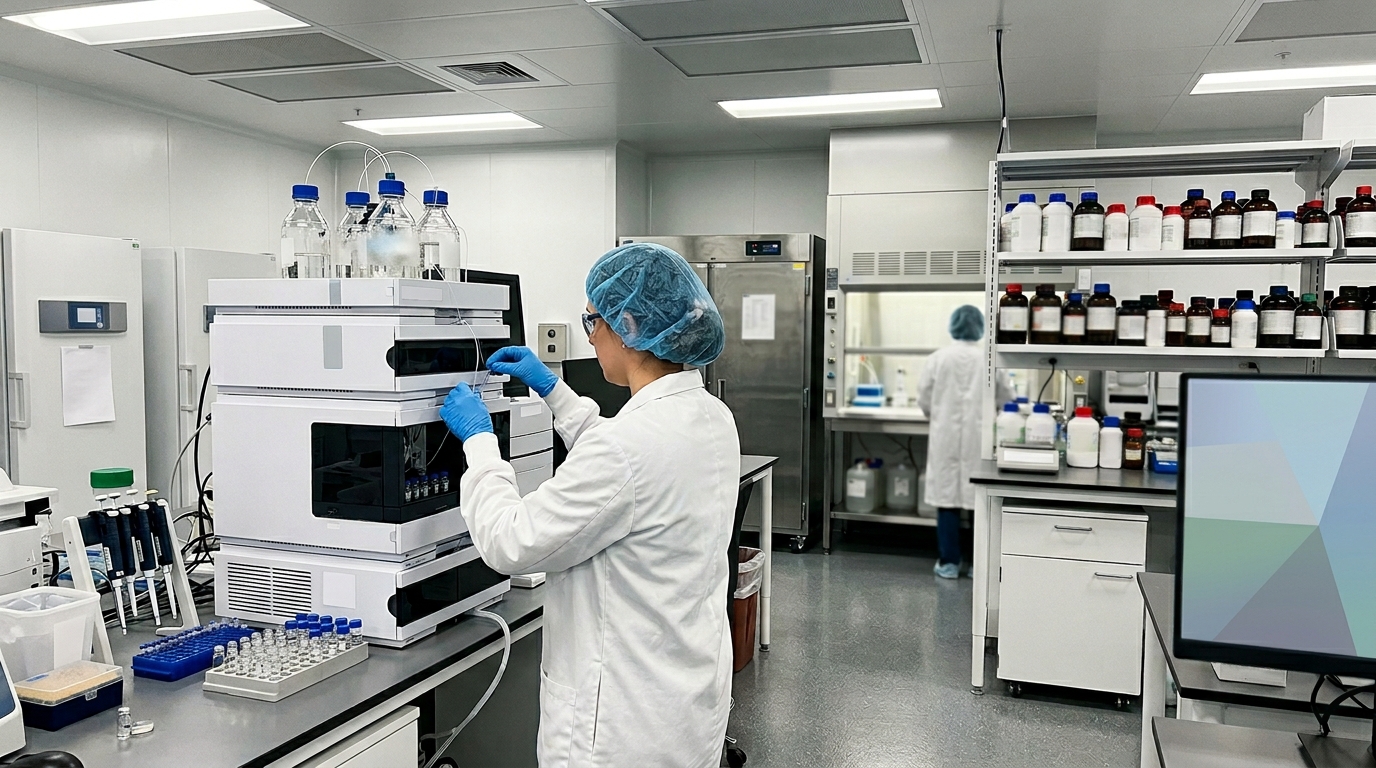
The European peptide market was missing one specific thing.
Bachem and Tocris exist for big institutional buyers with purchase orders. Their work is serious. Neither serves the smaller laboratory, the contract research organisation, or the qualified accredited researcher operating outside a large institution. Particle Peptides, Semax Polska, and a handful of other European vendors operate at smaller scale, but none publish third-party certificates before stock goes on sale, and none carry the depth of testing that a serious acquirer eventually expects.
I spent years sourcing research material inside European pharmaceutical and analytical supply chains before starting this. The same pattern kept turning up. Certificates written by the same vendor that sold the material. Batch numbers an outside party could not check. A different lab from one batch to the next, so the numbers never lined up. And no way to hold a vial in your hand and confirm it against a public record.
"A certificate of analysis is not really a certificate when it is written by the same party that sold the material."
So I built the supplier I wanted to buy from, and we run it to one rule we will not bend: a batch is tested before it lists, and its certificate is published with it before it goes on sale. Not a certificate we wrote. One from an lab, with the batch number on it, that you can check yourself. Janoshik Analytical, in Brno, is one of the laboratories whose reports we publish, and we commission additional Janoshik checks on selected batches as a quality control layer above the supplier certificate. The standard is simple: a certificate goes up before the batch is released for shipment, every vial carries a QR code that opens its public verification page, and the digital fingerprint of each certificate is posted to a public record the day it goes live, so it cannot be quietly changed later without breaking the fingerprint. The chain is short, public, and honest.